


Building coders: How Gamuda AI Academy is empowering Sabahan talents
Kota Kinabalu (July 28): A growing initiative by Gamuda AI Academy is positioning Sabah as a key player in Malaysia’s push to build a future-ready artificial intelligence (AI) workforce, while offering a replicable model for other states.
“At Gamuda, we see AI not just as a technology shift, but as a capability shift,” said John Lim Ji Xiong, Gamuda’s Group Chief Digital Officer.
The AI Academy, he said, is about equipping individuals with the skills to participate meaningfully in this new economy, regardless of where they come from.
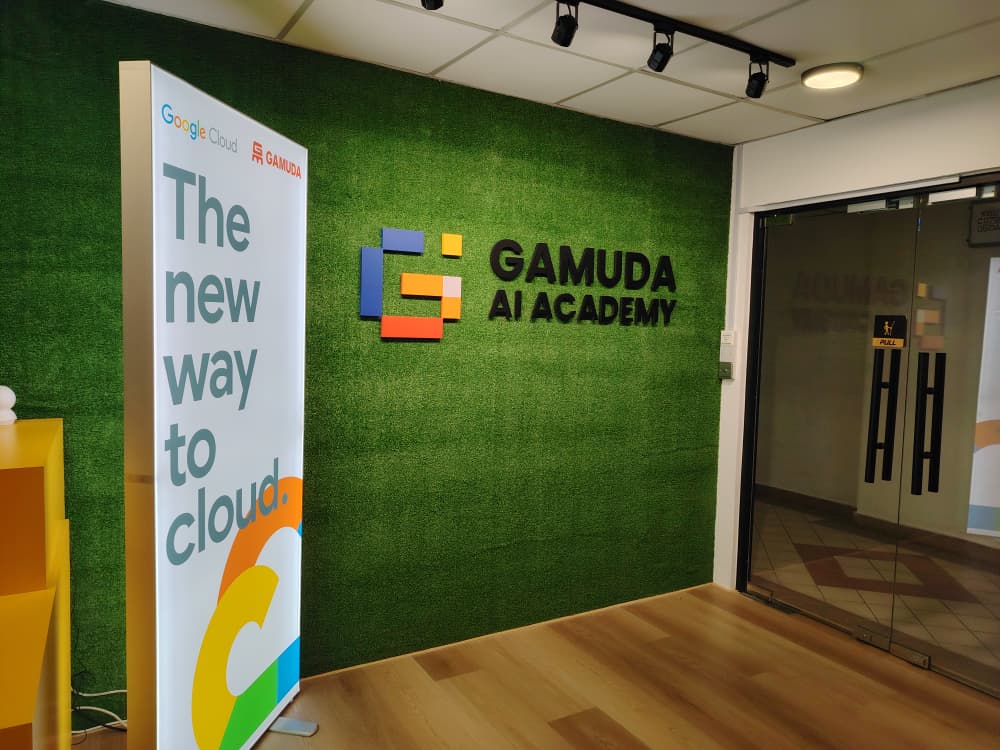
Operating from its Kota Kinabalu facility at Menara MAA, which was officially opened on Feb 2 this year, Gamuda AI Academy’s Sabah Campus has trained more than 100 students across three cohorts.
According to its manager, Dr Prashanth Kumar, the centre can accommodate up to 45 students at any one time and is supported by a team of three full-time trainers.
“What makes this academy unique is that we are not just focused on teaching, but also on building a sustainable tech ecosystem in Sabah,” he said.

Lim emphasised that the initiative is designed to go beyond conventional training.
“What we are building goes beyond a training programme. It is an ecosystem where industry, technology partners, and local communities come together to create real pathways from learning to employment and innovation,” Lim added.
The training team is led by Sabah-based trainer Danial Asyraf, alongside two junior trainers who are themselves graduates of the academy’s first cohort, a deliberate move to cultivate local talent and leadership.
“They showed strong passion and initiative, even helping their peers during and after their training. That’s the kind of commitment we want to nurture here,” said Dr Prashanth.
The academy runs an intensive three-month, full time programme from Monday to Friday, with classes held from 9am to 3pm, followed by personalised mentoring sessions until 5pm to ensure no student is left behind.
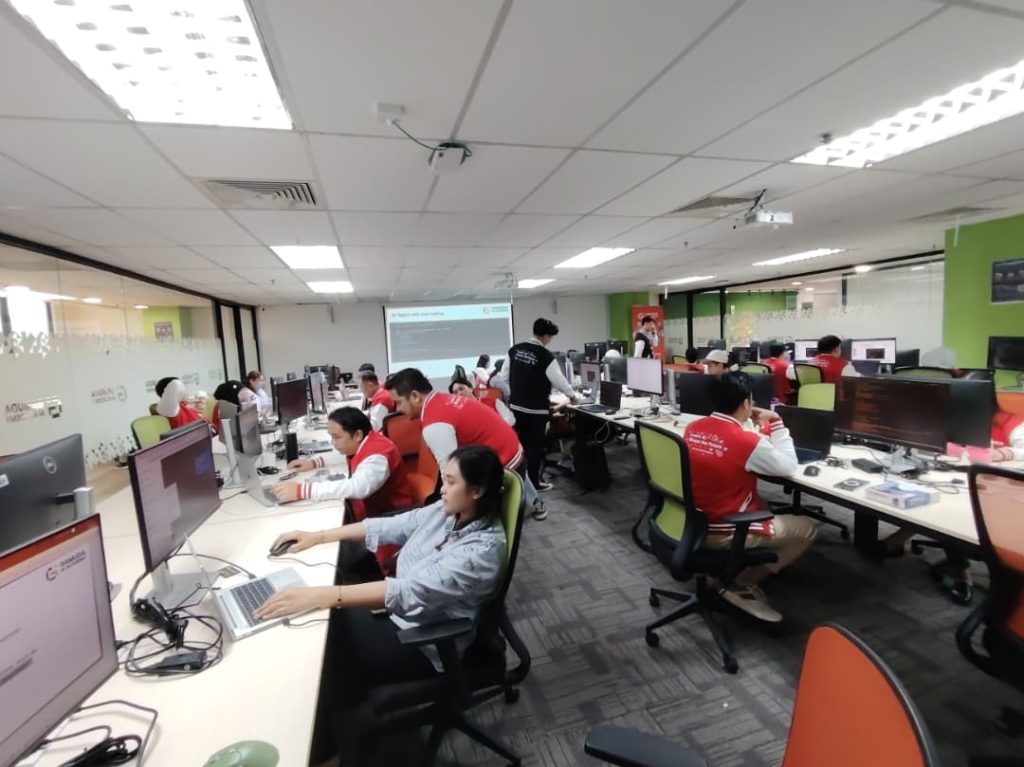
Lead trainer John Stefan Serit said the curriculum focuses on full-stack web development integrated with AI, covering front-end, back-end and practical AI applications.
“We start from the basics and bring students up to an advanced level within three months. It’s intensive, but the results have been encouraging,” he said.
Beyond technical skills, the academy emphasises real world application. Students are required to develop capstone projects to address local challenges in Sabah.
Among earlier projects was an AI powered system capable of detecting road potholes through images and assessing their severity. Current cohorts are exploring solutions in agriculture and disaster mitigation.
“For Cohort 3, many are working on agriculture-based platforms to help local farmers connect to markets, especially those operating in tamu (local markets),” said Danial.
“Others are developing flood detection systems to improve early warning capabilities in flood-prone areas such as Likas,” he said.
“The focus on solving local challenges is intentional,” Lim said, adding, “When talent is developed within the context of real community needs, the solutions are more relevant, more adoptable, and ultimately more impactful.”

The academy’s approach includes regular engagement with stakeholders such as government agencies and industry players, who provide input and feedback on student projects to ensure relevance and potential for real-world adoption.
Students also receive training in soft skills, including pitching, presentation, and resume writing, to better prepare them for employment.
“This is not just about coding. It’s about preparing them for the working world,” John Stefan added.
The programme is offered free of charge under Yayasan Gamuda, the foundation arm of Gamuda.
It is open exclusively to Sabahans aged 18 to 40, including school leavers and fresh graduates, subject to an interview process designed to identify motivated candidates.
“In Kuala Lumpur, we focus on helping coders grow. But in Sabah, we are building coders from the ground up,” said John Stefan.
“What we are building in Sabah has proven that AI talent can be nurtured anywhere when the right ecosystem, support and opportunities are in place,” said Lim.
“The success of the Sabah blueprint shows that AI education does not have to be exclusive or intimidating. At Gamuda AI Academy, we believe AI is for everyone. Our programme is designed to be highly accessible and practical, allowing individuals from all walks of life, including those with no prior coding background, to learn, adapt and thrive in the digital economy,” he pointed out.
Despite being free, the programme requires a full-time commitment, and participants must provide their own laptops, although limited loan units are available.
Some of the graduates from previous cohorts have secured employment, while others have pursued further studies, started their own projects, or are still seeking opportunities.
The academy works closely with local partners, including the Sabah Ministry of Education, Science, Technology and Innovation (KPSTI), Sabah Credit Corporation, Sabah Net Sdn Bhd (Sabah Net), Sabah Creative Economy & Innovation Centre (SCENIC) and Universiti Malaysia Sabah (UMS), to strengthen the state’s digital talent pipeline.
With its blend of technical training, industry collaboration and community-focused innovation, the Gamuda AI Academy is increasingly being seen as a blueprint for scaling AI workforce development across Malaysia.
Looking ahead, Lim noted that the role of AI will continue to expand across industries. “AI is already reshaping how we work. The differentiator will not be access to technology, but the ability to apply it. That is why we emphasise hands-on learning and real-world application from day one.”
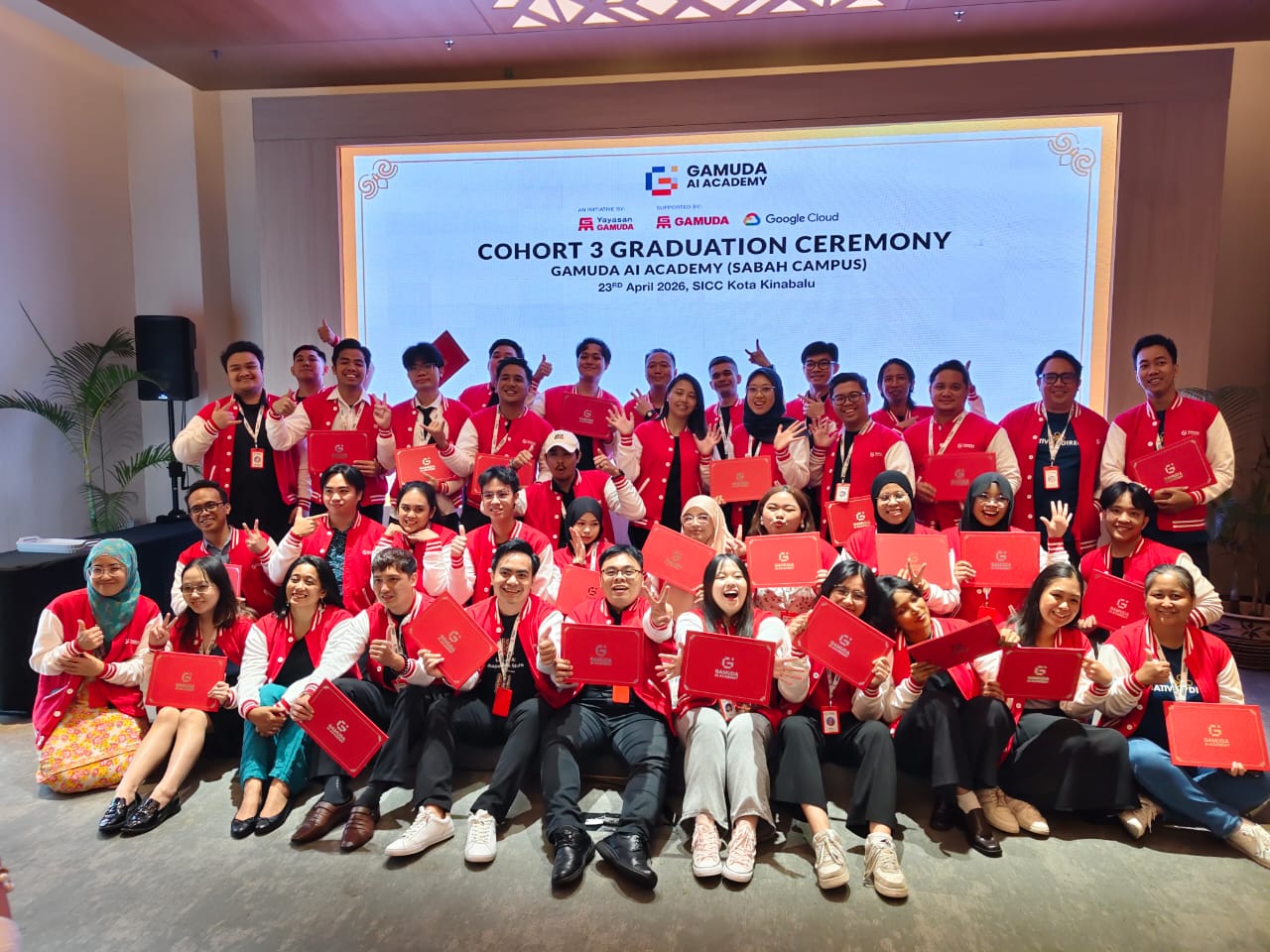
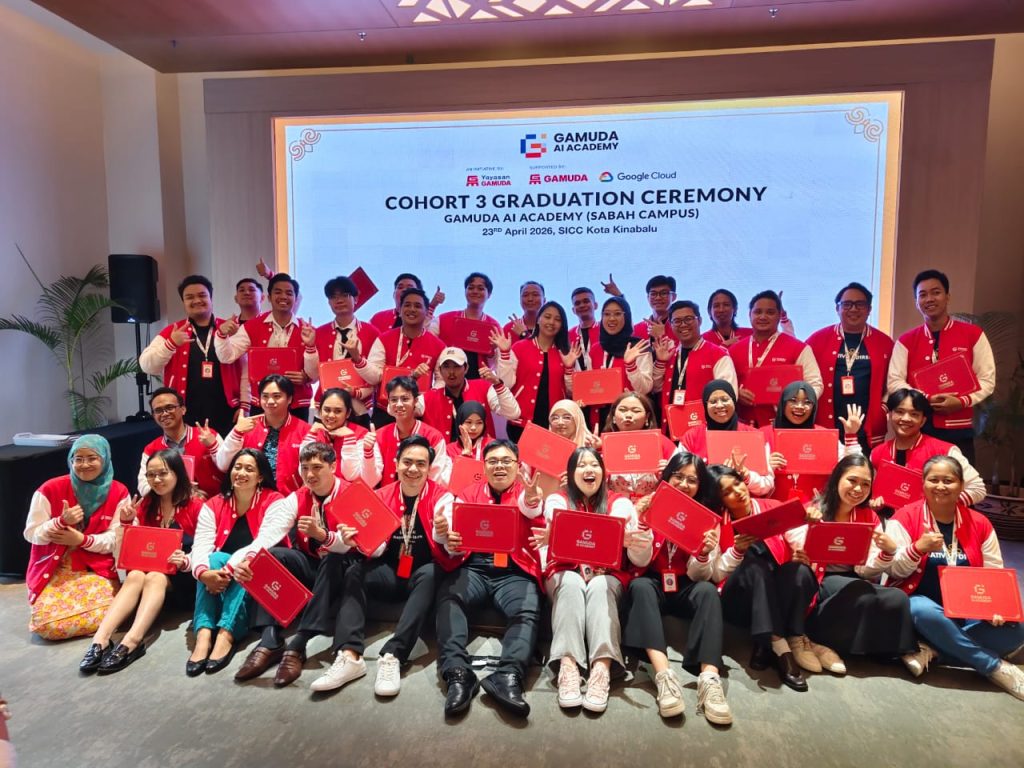
Gamuda AI Academy marked a significant milestone with the graduation of its third cohort in Sabah, underscoring the state’s growing role in developing artificial intelligence (AI) talent to support Malaysia’s digital economy.
The graduation ceremony marked a proud and meaningful milestone for Sabah, with 39 students presenting their capstone projects as problem solvers, innovators and future AI leaders.
Their presentations reflected more than academic achievement. They demonstrated how ideas had been transformed into practical solutions, confidence had been built through perseverance, and talent had evolved into real-world capability.
Having successfully navigated a demanding and fast-evolving field, the graduates are now equipped with skills that are becoming increasingly essential in today’s workforce. As AI continues to reshape industries, redefine jobs and transform the way people live and work, the ability to understand and apply AI has never been more important.
Speaking at the third cohort’s graduation ceremony at the Sabah International Convention Centre here, Sabah Net CEO Chin Kah Yi echoed the importance of collaboration in building Sabah’s digital future.
“Today is not just a graduation. It is proof of what happens when the right players come together with the right intent,” he said.
Chin stressed that meaningful transformation comes from alignment between industry needs, technology and talent development.
“When that alignment happens, we don’t just run programmes, we change the trajectory of an entire ecosystem,” he said.
He added that initiatives such as the academy go beyond awareness, creating real capability, opportunities and momentum within Sabah.
“At Sabah Net, we are committed to pushing more of these high-impact collaborations forward. But we cannot do it alone,” he said, calling on industry leaders, educators and policymakers to work together.
Chin emphasised that Sabah must focus on building a high value workforce capable of competing, innovating and leading, rather than merely catching up with more developed regions.
From an industry perspective, he noted that demand for AI talent is rapidly increasing.
“Not long ago, companies were asking, ‘Do we need AI?’ Today, that question is gone. Now they are asking, ‘Where can we find the right talent?’,” he said.
He highlighted the growing role of AI across key sectors such as the blue economy, agriculture, logistics and tourism, where technology is already improving efficiency and enabling smarter decision-making.
“These are not future possibilities. These are current priorities,” he said.
Chin stressed that local challenges require developed solutions.
“These challenges cannot be solved by importing solutions alone. They must be built here, by people who understand Sabah,” he said, adding that the graduates’ capstone projects demonstrate the capability of local talent.
The graduation of Cohort 3 further cements Gamuda AI Academy’s role as a key platform for nurturing AI talent in Sabah, aligning with broader efforts to strengthen Malaysia’s digital economy and position the state as a growing hub for tech innovation.