


Gamuda helps shape Australia’s renewable energy future
The Malaysian company is a trusted regional group shaping infrastructure, communities and a sustainable future in Australia.
Malaysian infrastructure giant Gamuda Berhad is investing in and building renewables projects across Australia that are helping shape the nation’s clean energy future.
Kuala Lumpur-based Gamuda Berhad entered the Australian market in 2015 through its property division, Gamuda Land, before establishing its engineering and construction presence in 2019.
The company’s 3 infrastructure business units – Gamuda Engineering Pty Ltd (GE Australia), DT Infrastructure Pty Ltd (DT Infrastructure) and Tunnelling Solutions Pty Ltd – have since delivered major projects across renewable energy, tunnelling, and road and rail transport.
Gamuda’s Australian divisions employ more than 2,000 staff across 14 offices to deliver these projects. More recently, Gamuda Renewables is investing in projects that support Australia’s energy transition and emissions reduction targets.
DT Infrastructure partners with developers to deliver utility-scale solar and wind farms, including battery energy storage systems (BESS). It also builds critical renewable energy infrastructure to support projects like the Marinus Link, an undersea electricity and data interconnector between Tasmania and Victoria.
‘As Australia’s energy sector continues to evolve, our focus at DT Infrastructure is on bringing the right people, experience and capabilities together to deliver renewable energy infrastructure safely, efficiently and sustainably,’ says John Anderson, Chief Executive Officer, DT Infrastructure.
‘By combining our deep infrastructure experience and local knowledge, we help clients overcome project delivery challenges, while ensuring we leave a lasting positive legacy.
‘We are committed to playing our part in Australia’s energy transition to achieve a clean energy future, through high-quality delivery on every project we do, so our clients and communities can trust the outcome.’
‘Austrade has played a part in Gamuda’s early entry into Australia through their understanding of the local market, connections across industry and identification of opportunities,’ adds Ewan Yee, Chief Executive Officer, GE Australia.
‘This contributed to GE Australia securing our first major infrastructure project in Australia. We’ve gone on to secure subsequent projects across the transport industry in road and rail, property and transit-oriented developments. More recently, we’ve expanded into water and renewable energy.’
Austrade opens doors to infrastructure opportunities in Australia
Austrade supported Gamuda’s entry and growth in the Australian infrastructure market, providing insights and stakeholder connections in its formative years. This support played a role in Gamuda’s acquisition of DT Infrastructure, significantly expanding its footprint as a civil and engineering contractor in Australia. Gamuda brought innovative engineering technology, including its autonomous tunnel-boring machines, and full turnkey capabilities.
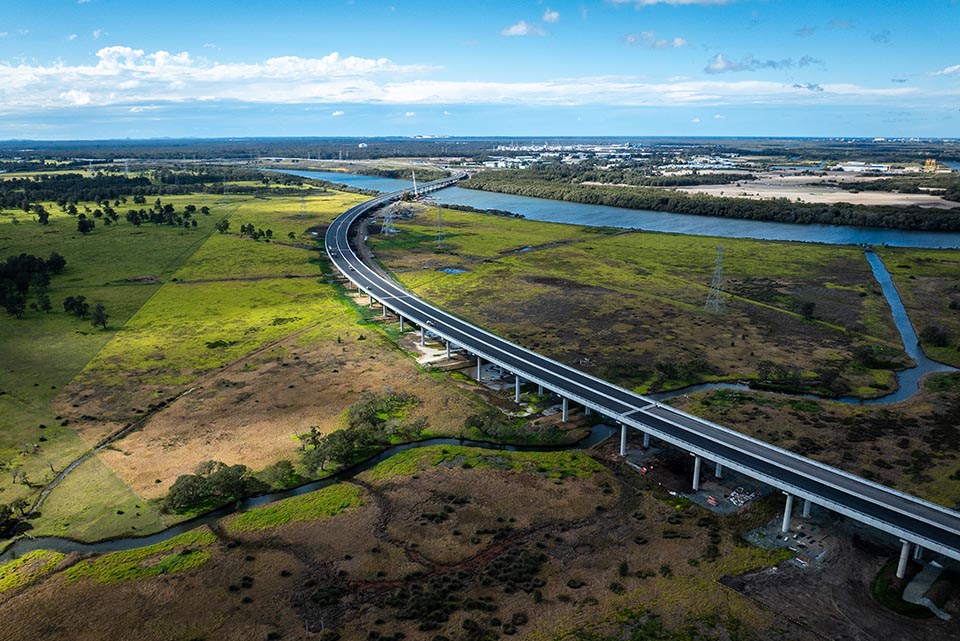
Gamuda quickly won road and rail projects in the country. These included partnering with John Holland to deliver the 10-km Black Hill to Tomago package, the southern section of the A$1.79 billion M1 Pacific Motorway extension. Delivered ahead of schedule, the new motorway extension opened to traffic on 11 September 2026.
The 15-km motorway extension is a major milestone for the Hunter region in New South Wales. It completes the missing link in the Sydney to Brisbane economic corridor and strengthens one of Australia’s most important freight routes. The extension also removes up to 25,000 vehicles per day from local streets.

In September 2026, Transport for New South Wales awarded GE Australia and joint venture partner BMD Constructions the A$624 million Elizabeth Drive Upgrade – Mamre Road Upgrade Stage 2 project. The project involves upgrading 4.5 kms of Elizabeth Drive and 3 kms of Mamre Road in Kemps Creek, Western Sydney, including civil, structural and utility relocation works, with completion targeted for 2030.
In the same month, Gamuda’s rail expertise was recognised when Sydney Metro awarded an A$880 million contract for the Sydney Metro West – Parramatta Integrated Station Development (ISD) project to a consortium led by the Riverside Station Joint Venture, between GE Australia, Gamuda (Australia) (GL Australia) and MTR Corporation (Australia). The new contract is Gamuda’s third Sydney Metro contract win, following the Sydney Metro West – Western Tunnelling Package and Stations Package West.
Gamuda will build a total of 6 stations (5 under Stations Package West and one under the Parramatta ISD) along the Sydney Metro West alignment – a 24-km underground metro line between Parramatta and the Sydney CBD. It is one of Australia’s largest transport projects and will feature 9 new stations, driverless trains and fully accessible infrastructure.
Supporting Australia’s energy transition
To support Gamuda’s entry into the renewable energy sector, Austrade provided information on Australia’s renewable energy priorities and introduced the company to energy industry stakeholders and state government representatives.
Today, DT Infrastructure is partnering with Australian and international companies to design, build, operate and maintain several renewable energy projects across Australia.
The business was recently awarded engineering, procurement and construction (EPC) contracts for 3 major projects in Queensland and Western Australia. The projects cumulatively comprise over 1 GW of solar generation and 900 MW/3,600 MWh of battery storage, bringing DTI’s total to over 2 GW of renewable energy in delivery.
The Smoky Creek and Guthrie’s Gap Solar Power Stations in central Queensland are 2 of the largest solar and battery hybrid developments under construction in Australia. They comprise 720 MWp of high-capacity solar generation, paired with a 600 MW / 2,400 MWh BESS. DT Infrastructure will deliver design, EPC, testing and commissioning works for Edify Energy, as well as ongoing operations and maintenance services.
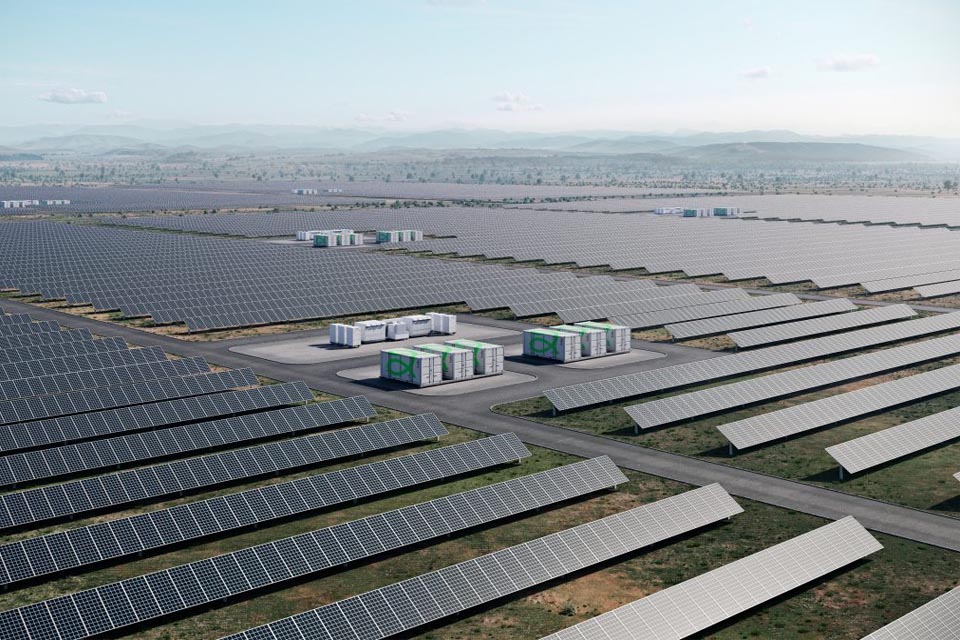
DT Infrastructure is also working with Edify Energy on the Ganymirra and Majors Creek Solar Power Stations. Located in north Queensland, this project comprises 360 MWp of solar generation, a 300 MW / 1,200 MWh integrated BESS, a new substation and transmission infrastructure.
Another key development is the Jinbi Solar Farm, a 75 MW project located on Yindjibarndi Ngurra (Country) in Western Australia’s Pilbara region. Led by the Yindjibarndi Energy Corporation, it is one of Australia’s largest Indigenous-led renewable energy initiatives. Once operational, the facility will supply renewable energy to support Rio Tinto’s operations in the Pilbara region.
DT Infrastructure and Samsung C&T Corporation (through their joint venture TasVic Greenlink) are building a “clean energy highway” between Tasmania and Victoria. The joint venture is carrying out infrastructure works for Stage 1 of the Marinus Link project, an undersea and underground electricity and data interconnector project. It will combine Victoria’s wind and solar with Tasmania’s hydropower and wind resources to supply power to Australia’s National Electricity Market.
In September 2026, GE Australia and Yanara signed the delivery contract for Stage 1 of the Mortlake Energy Hub in western Victoria, marking the next step towards construction. The project is a 300 MW hybrid renewable energy facility comprising a 435 MWp solar and 1,449 MWh BESS. It will connect to Victoria’s existing 500 kV network via the Mortlake Terminal Station, enabling renewable energy to be stored and supplied as needed.
Investing in Australia’s clean energy future
Gamuda Renewables, the investment and equity arm of the business – recently made its first investment in Victoria by acquiring an interest in the Hazelwood North Solar Farm and Battery Energy Storage System. The 450 MW hybrid solar and battery energy storage project spans 1,100 hectares in the Latrobe Valley.
The Victorian investment increases Gamuda Renewables’ Australian portfolio to 3 assets across the National Electricity Market. The other 2 are Weasel Solar Farm and Cellars Hill Wind Farm, both located in Central Highlands, Tasmania.
Weasel Solar Farm has a potential capacity of 260 MW, connecting to an existing 220 kV across 435 hectares. Cellars Hill Wind Farm, located within the Central Highlands Renewable Energy Zone (T3-REZ), is a proposed grid-connected wind farm with a potential capacity of up to 350 MW.
‘Australia has been an important part of Gamuda’s international growth plan, allowing us to expand our portfolio and build strong local capabilities and partnerships,’ says Yee. ‘In turn, we’ve shared our innovative ways of working, contributed to the local supply chain, created job opportunities and left improvements beyond the infrastructure in the communities where we operate.
‘As Australia works towards its clean energy targets, we’re proud to be part of this journey, growing our renewables portfolio and helping deliver the infrastructure the country needs to power a more sustainable future. As we grow, we remain steadfast in our quest to deliver the infrastructure Australia needs, while leaving a positive, lasting legacy.’