

With insights from Grace Gan, Manager of Enabling Academy.
Everyone wants to talk about why inclusive hiring matters. Fewer people talk about what happens after the hire.
The awkward conversations. The failed placements. The managers who don’t know what to do. The assumptions that turn out to be wrong.
Ten years ago, corporate employment for autistic individuals was rare. Most opportunities were in retail, supermarkets, and F&B, and workplace awareness of autism was still limited. Against that backdrop, Gamuda began its neurodiversity journey in 2014 by hiring autistic individuals into its workforce.
As those early efforts grew, Yayasan Gamuda established the Enabling Academy in 2017 to prepare and support more autistic talent for employment. In 2024, the Academy expanded its mission to support the wider neurodivergent community.
There was no existing roadmap to follow. That’s why the Enabling Academy has never been about getting everything right from day one. It’s been about learning, adjusting, and sometimes starting over.
This isn’t a success story. It’s a playbook built from the lessons, mistakes, and realities of building opportunities for autistic talent, and later broadening that mission to support neurodivergent talent in 2024.
Lesson 1: There is No Blueprint
Most organisations begin their neurodiversity hiring journey looking for a playbook. A framework. A checklist. A proven model to follow. So did the Enabling Academy.
What the team progressively learned, however, was that there is no universal blueprint. What initially looked like a hiring issue was often a job-matching issue.
Some candidates who looked promising on paper struggled in the roles they were placed in. Rather than treating it as a hiring failure, they tested departmental rotations and later adopted contract-first placements to help both employees and the organisation assess fit.
Often, the issue wasn’t the person, it was the placement.
That experience taught us that every workplace, every role, and every neurodivergent individual are different. As Grace Gan, Manager of Enabling Academy, puts it:
"When you've met one neurodivergent individual, you've only met one."
The goal isn’t to find a blueprint that works for everyone. It’s to build a system flexible enough to find the right fit.
Lesson 2: Interviews Don’t Tell the Whole Story
Most hiring processes are designed to assess how well someone performs in an interview. But interview performance doesn’t always reflect workplace potential.
One of the earliest lessons Enabling Academy learned was that some capable candidates struggled in conventional interviews despite being fully capable of doing the job.
That is why job coaches were often invited into the process, not to answer on behalf of candidates, but to help rephrase questions, clarify expectations and bridge communication gaps when needed. Over time, hiring managers have also learned to focus on understanding a candidate’s abilities rather than their interview technique alone.
The same principle applies beyond the interview room. In some cases, practical assessments can offer a clearer picture of a candidate’s strengths and suitability for a role than conversation alone.
The goal isn’t to lower the bar. It’s to ensure candidates are assessed on what actually matters. Because the best candidate isn’t always the one who interviews best.
Lesson 3: A Great Candidate Can Still Be the Wrong Fit
One of the biggest misconceptions about neurodiversity hiring is that success comes down to finding the right candidate.
In reality, finding the right environment matters just as much, if not more.
Enabling Academy has seen candidates who were more than capable of doing the job, but struggled because of factors that never appeared in the job description. Team dynamics. Communication styles. Workplace culture. A manager’s approach. Mental health. Sometimes, these factors mattered more than technical ability.
Gan recalls one candidate who was highly articulate, competent and able to perform the work. Yet he struggled to feel part of the team. He was later transferred to another department in search of a better fit, but ultimately resigned. Not because he couldn’t do the job, but because the environment wasn’t working.
Because inclusive hiring isn’t just about matching people to roles. It’s about matching people to teams, cultures and ways of working.
Lesson 4: Behind Every Success Is a Support System
When Enabling Academy evaluates a potential placement, it looks at four factors: the physical environment, the job itself, company culture, and the human environment.
Of all four, the human environment matters most.
Successful placements are rarely driven solely by policies. More often, they are shaped by the people around the employee. The supervisor who takes the time to explain, the buddy who checks in regularly, or the manager who chooses patience over frustration.
Today, more than half of Gamuda’s employees with autism have reached 10 years of service. According to Gan, that longevity would not have been possible without managers, supervisors and buddies who believed in them, even during the difficult early years.
On the flip side, even neurotypical individuals can struggle in environments that are overly individualistic, highly political, or fast-paced without support structures.
In the end, what keeps people going isn’t policy. It’s knowing that someone believes in them. For neurodivergent individuals, that can make all the difference.
Lesson 5: Build a System, Not a Champion
Many inclusion initiatives begin with one passionate advocate. A manager, HR lead or business leader willing to champion the cause.
But people move on. They change roles, join other companies, or leave altogether.
Promising initiatives lose momentum when their biggest supporters move on. In one case, an employee who had previously been given a second chance was ready to return, but by then, the person who had strongly supported him was no longer with the organisation.
The opportunity disappeared with them. Experiences like these reinforced a key lesson that lasting inclusion cannot depend on a single individual. It needs to be embedded into the organisation through clear processes, shared accountability and leadership support.
Focus on building capability, not on creating dependencies. Awareness training equips managers, supervisors, buddies, and HR teams to better support neurodivergent employees, while job coaches work alongside both employees and employers until organisations can build their own in-house support systems.
Inclusion becomes sustainable when it can survive a change in personnel.
And the Lesson Beyond the Lessons
Perhaps the biggest mistake organisations make is treating inclusion like a campaign.
A campaign launches. Inclusion doesn’t. It has to be built, tested, refined and sustained over time.
Enabling Academy has seen organisations start with great enthusiasm, only to struggle when the spotlight fades. Some had the right intentions but lacked the processes, people or support systems needed to sustain the programme long-term.
Inclusion should be treated like any other organisational capability. What works for one company may not work for another, and no amount of publicity can compensate for a lack of readiness.
Just as importantly, neurodiversity hiring should never be viewed as charity. The goal is not to create opportunities for the sake of representation, but to recognise and invest in talent, capability and potential.
After all, the goal isn’t to build a programme that looks good on paper. It’s to build one that lasts.
Partnering with Us
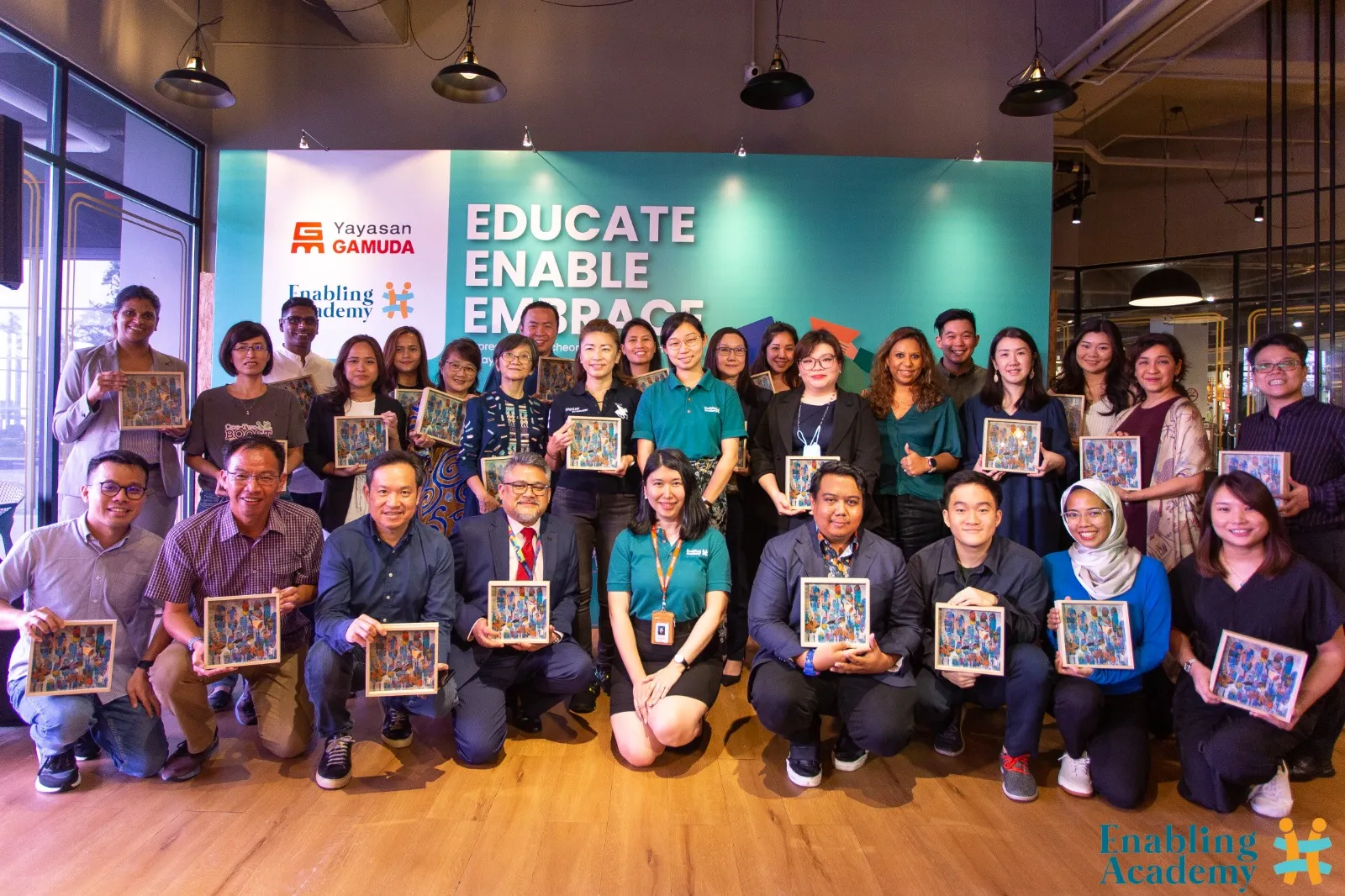
Every inclusive workplace starts with a conversation. If your organisation is looking to create meaningful employment opportunities for neurodivergent talent, Enabling Academy works with employers to build the capability, support systems and confidence needed to make inclusive hiring sustainable.
Get in touch at enablingacademy@yayasangamuda.my or 012-890 0191.