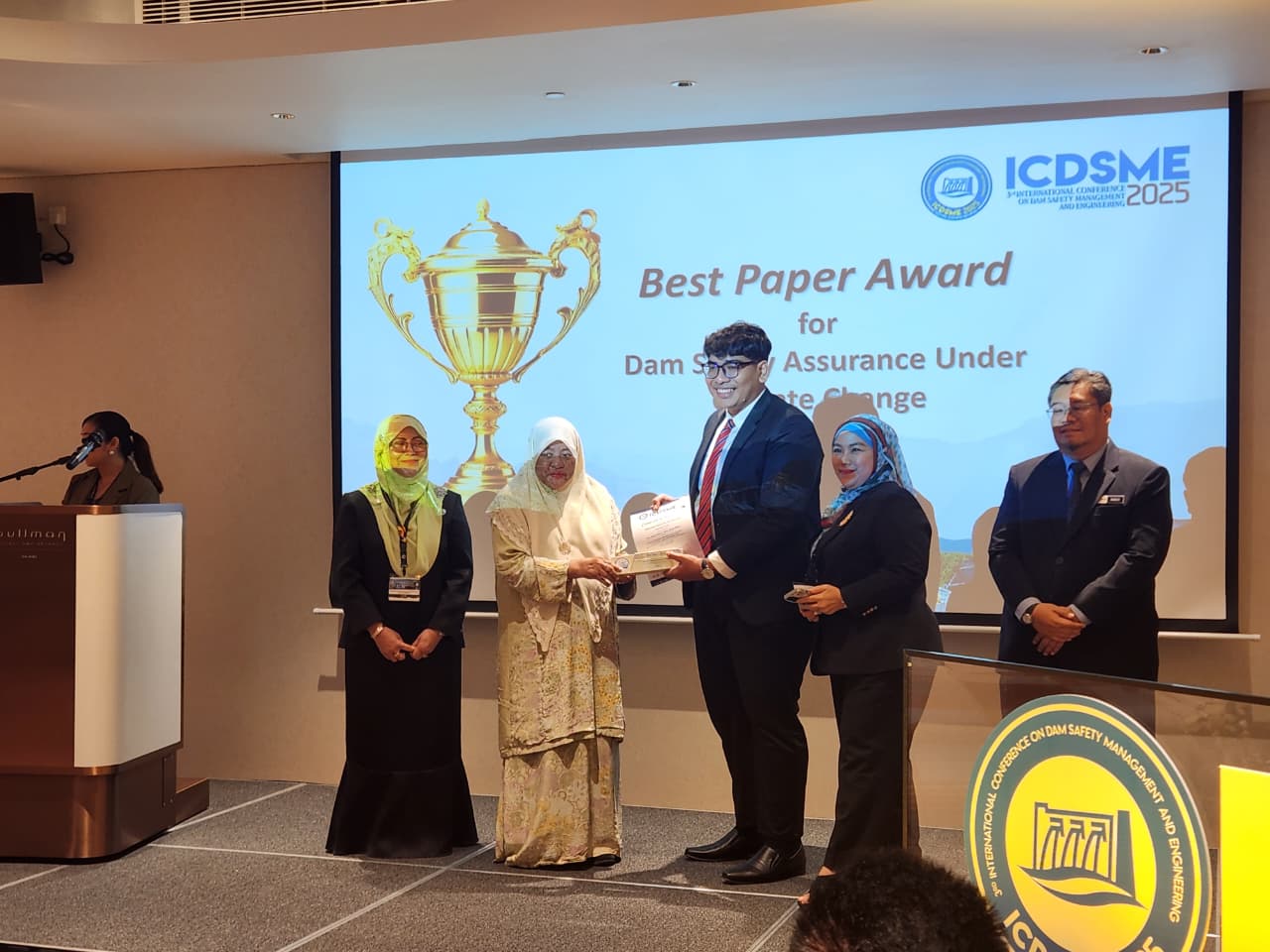
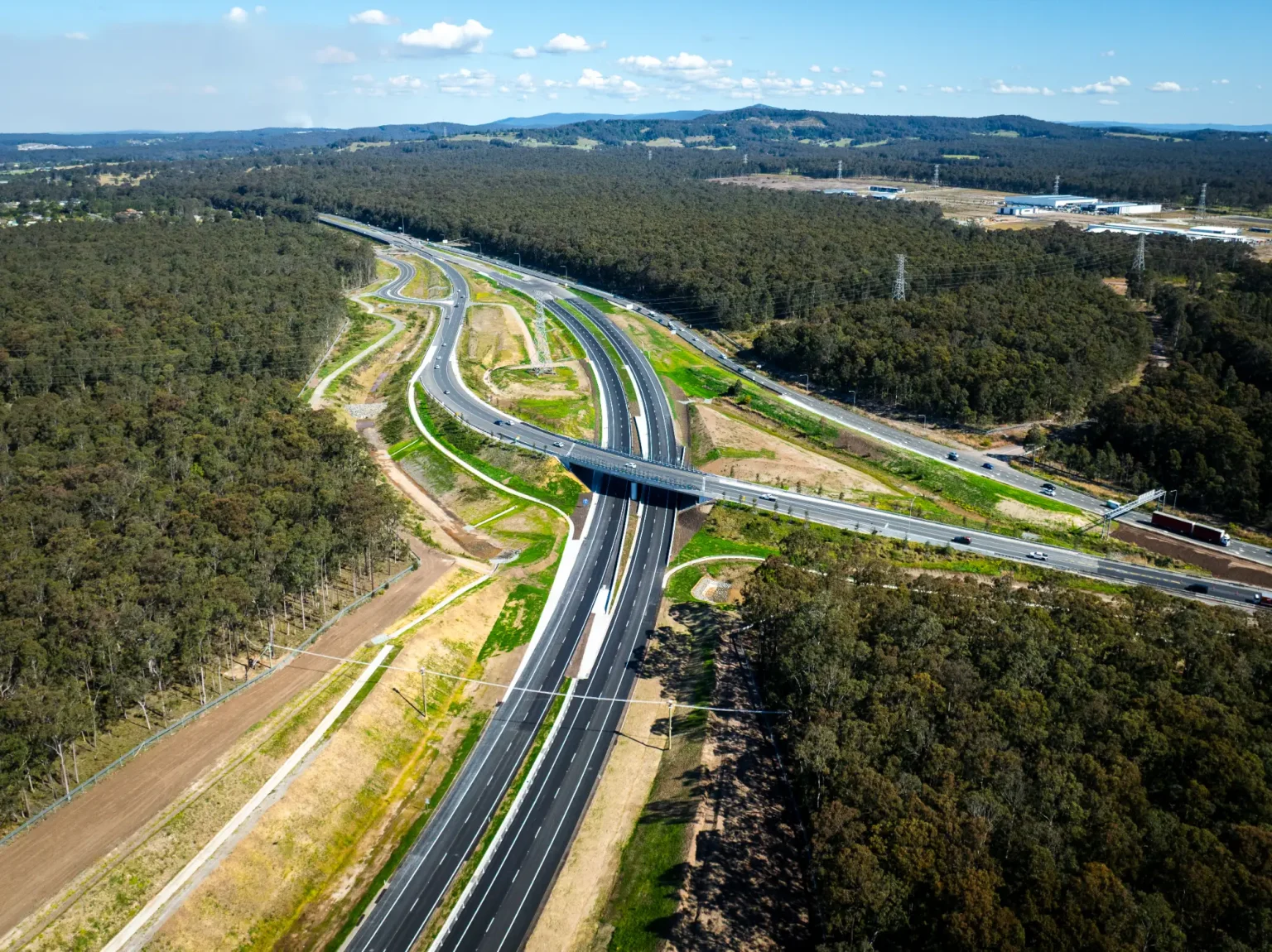
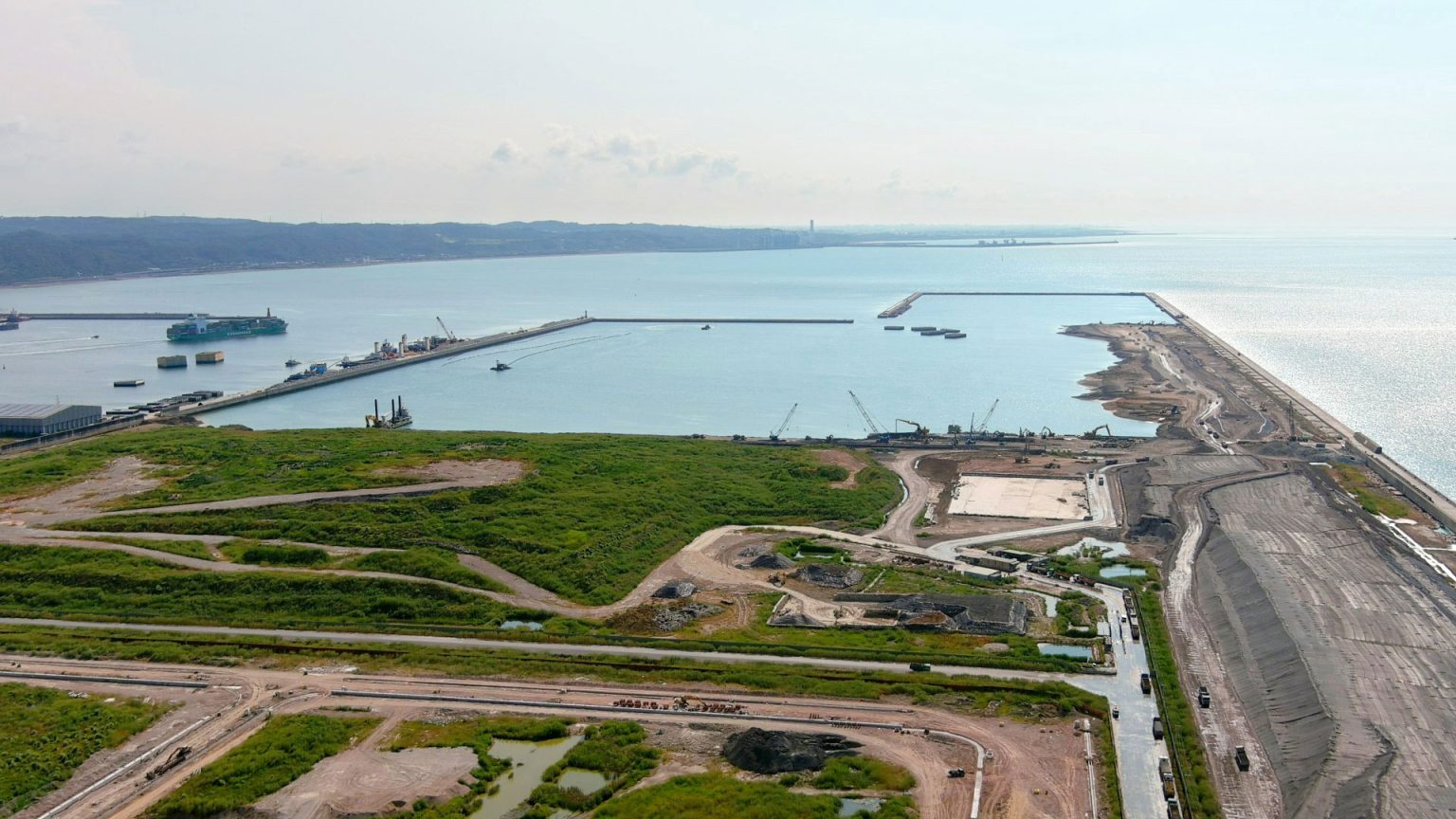
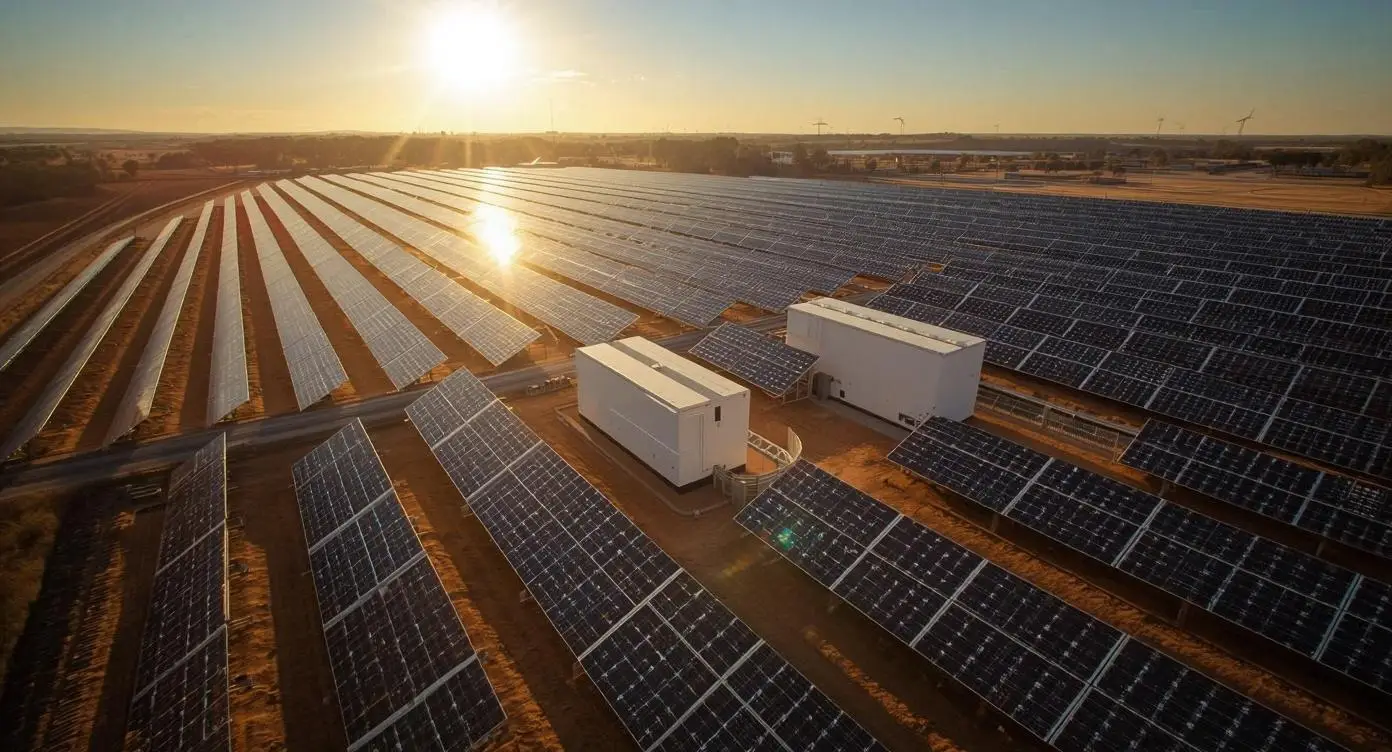
We won the Best Paper Award at the International Conference on Dam Safety Management and Engineering 2025! This award-winning paper titled “Assurance for Dam Safety and Resilience under Climate Change for UPHEP Dam” was written by Dr Rosidha Febriana Tjoe (Senior Manager of Design) and Muhamad Rusdi Bhaharuddin (Design Engineer) from the Design and Technical team of the Ulu Padas Hydroelectric Dam Project (UPHEP).
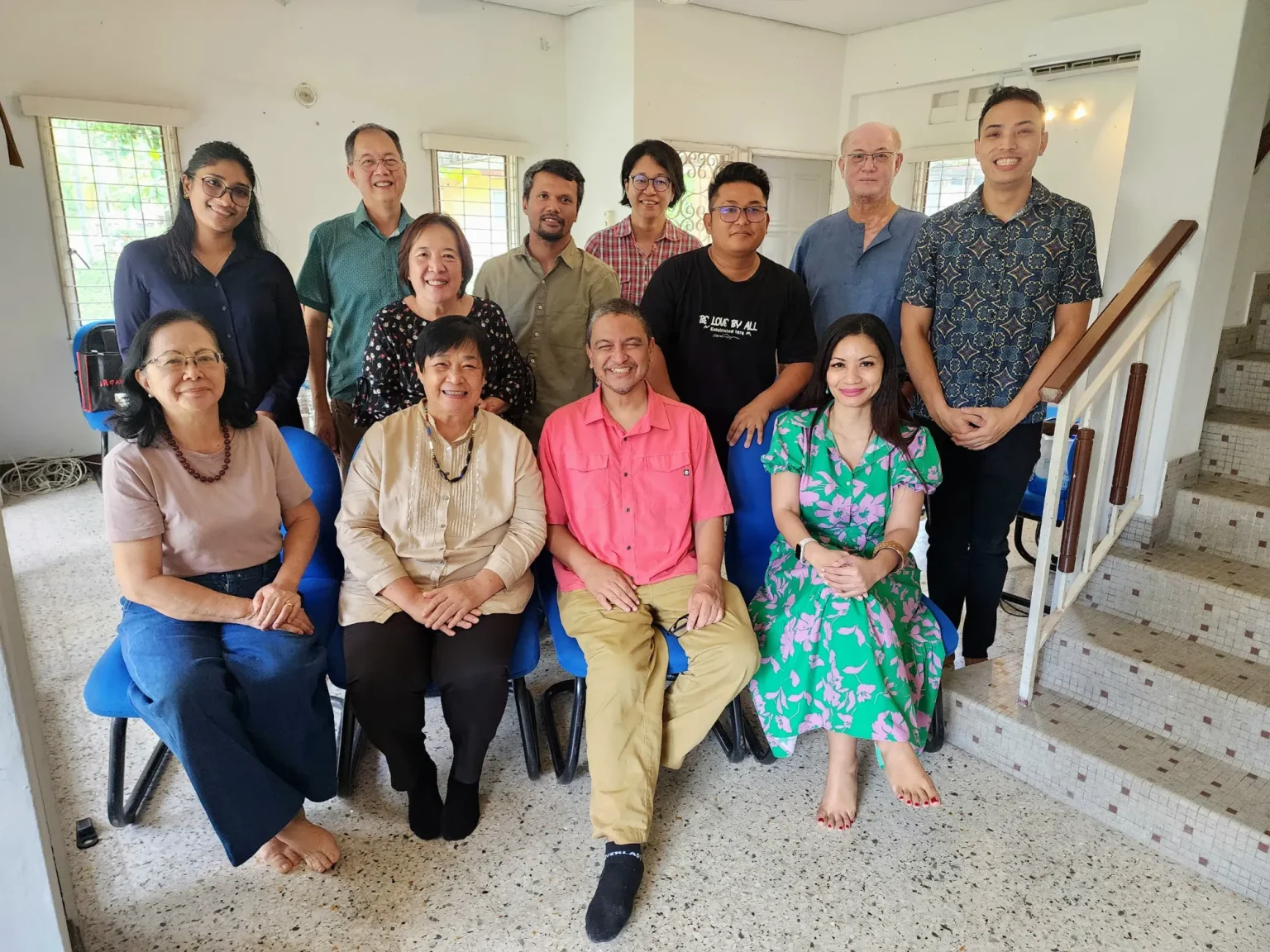
[Second from right] Dr Rosidha Febriana Tjoe and [third from right] Muhamad Rusdi Bhaharuddin celebrating a standout win after their research rose above 107 international submissions to earn the Best Paper Award. Their work impressed ICOLD judges for its bold approach to refining climate and rainfall analysis, a step that could influence future dam design practices globally.
The Context? Sabah’s Growing Needs
This paper looks at Sabah’s fast-growing energy demand and shows how safe, climate-ready hydropower can deliver cleaner, more reliable electricity.
Why Was This Research Needed?
The study examines how the dam can withstand the Probable Maximum Flood (PMF) amid today’s climate pressures, ensuring its resilience is key for reliable energy and the safety of communities downstream.
The Risk We Can’t Ignore
The team recognised that even a single dam failure could have major social, environmental and economic impacts. With climate change increasing flood risks, ensuring dam safety is more critical than ever.
The Big Hurdle…
One major hurdle was determining how climate change would alter extreme rainfall patterns in Malaysia. With limited local research available, the climate factors provided by the Department of Irrigation and Drainage Malaysia (DID) carry inherent uncertainties, as they are based on global climate models developed for subtropical regions and later downscaled for Malaysia’s tropical climate. This approach often results in more conservative values.
…And How We Tackled It
The team re-evaluated key hydrological parameters, particularly the climate adjustment factors used to estimate extreme rainfall for Probable Maximum Flood calculations. These DID factors, drawn from downscaled global climate models, often overestimate local conditions and can lead to inflated design costs, while underestimated factors risk unsafe structures. By refining them to better match Malaysia’s climate, the team achieved a safer and more cost-efficient outcome.
But It Wasn’t All Smooth Sailing
The team’s new approach initially faced hesitation because it challenged long-established design parameters that the industry has relied on for many years. Both internal teams and external practitioners were cautious due to the lack of local precedent and concerns about how refined parameters could affect design decisions and project costs
Over time, the findings proved their value. The refined climate and rainfall parameters delivered designs that were safe and more suited to local conditions, avoiding unnecessary over-design while still ensuring resilience against extreme floods.
This evidence convinced initially skeptical engineers, and International Commission on Large Dams (ICOLD) judges later endorsed the methodology for its meaningful contribution to dam safety analysis under climate pressures.
So… What Did We Learn?
The study assured that the Ulu Padas Hydroelectric Dam Project (UPHEP) can stay safe and resilient under current climate pressures. It also supports efforts toward Hydropower Sustainability Standard certification and encourages broader adoption of climate-resilient dam design in Malaysia.
DID YOU KNOW?
Founded in 1928, ICOLD has members from over 100 countries, totaling around 10,000 individuals
UPHEP Facts
Set to deliver 1,052 GWh of clean energy per annum.
Sabah’s 35% renewable energy goal supported for 2035.
15% boost in Sabah’s dependable capacity.
Yen So’s park and lakes blend urban regeneration with masterful township planning.
Today, if you visit it, you could never imagine what it looked like a decade ago.
We use tracking technologies to collect data relating to you to perform analytics, provide you with tailored content and ads based on your interactions on this and other sites or apps and allow you to share content on social media. By clicking on [Accept] you consent to this and to the sharing of this data with our partners. You can change your mind at anytime. Click here to find out more about our practices.
You can choose which analytical, functionality and targeting cookies we can set by clicking on the button(s):
However, if you use your browser settings to block all cookies (including strictly necessary cookies) you may not be able to access all or parts of our website.