Inside the culture of collaboration behind the M1 Pacific Motorway Extension to Raymond Terrace
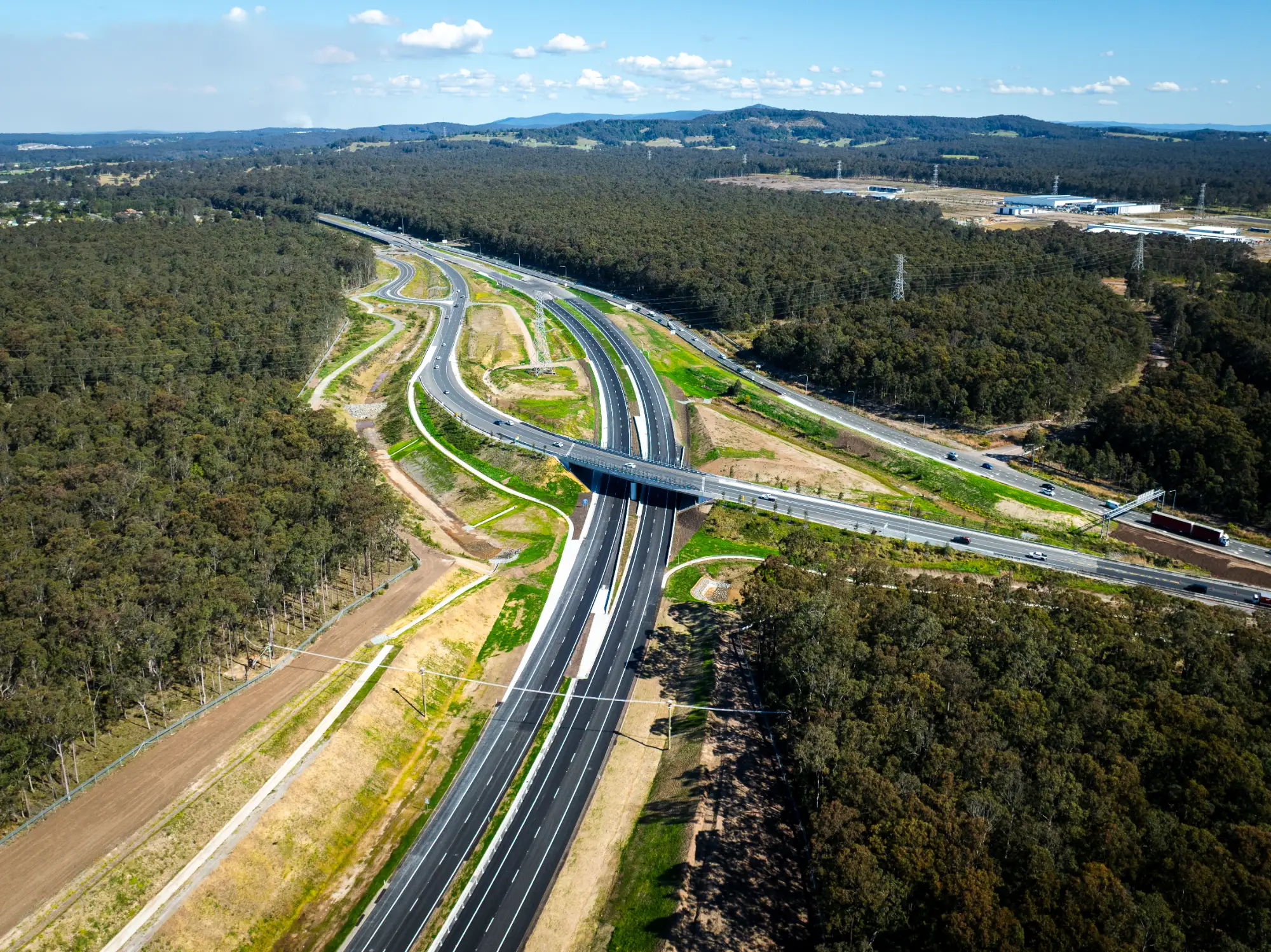
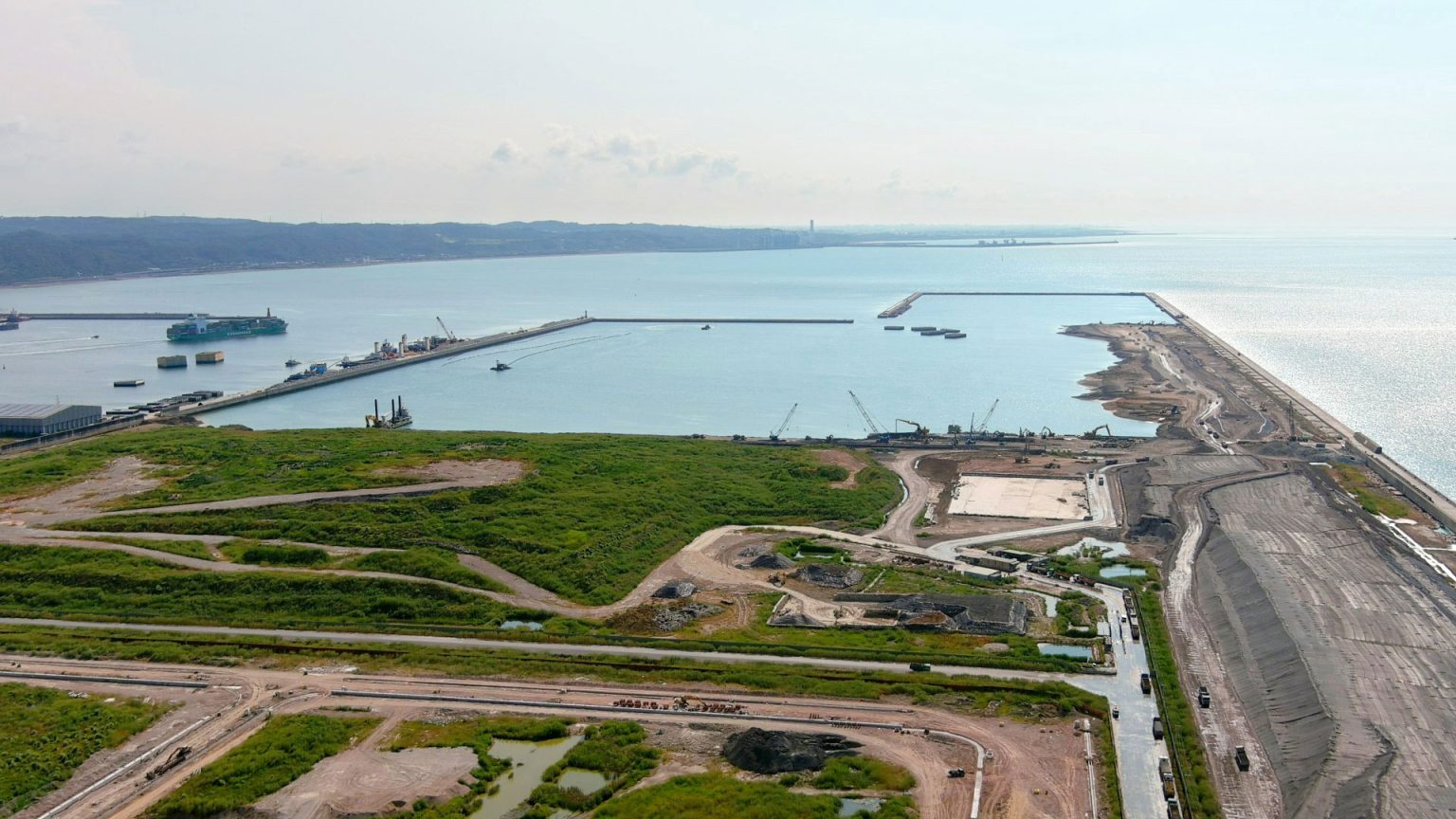
Aerial view of the completed Black Hill to Tomago interchange on the M1 Pacific Motorway Extension.
There are moments on a major infrastructure project when the plan stops being the answer. On the M1 Motorway extension to Raymond Terrace, those moments became opportunities for the John Holland-Gamuda Joint Venture to show what collaboration could really achieve.
The Black Hill to Tomago southern package had to navigate soft and saturated ground across the Hunter River floodplain, existing roads and railway lines, waterways, 132kVA power infrastructure and live traffic. The 10-km section is expected to remove more than 25,000 vehicles a day from key congestion points, which meant much of the work had to happen at night, under a strict noise-management regime and constant engagement with nearby residents.
“The project had many challenges,” says Brett O’Leary, Project Director for John Holland-Gamuda Australia Joint Venture. “We were also bringing together a new team from many different partners, not just the joint venture, but TfNSW, the Independent Certifier, our design partners, regulators, unions and dozens of subcontractors.”
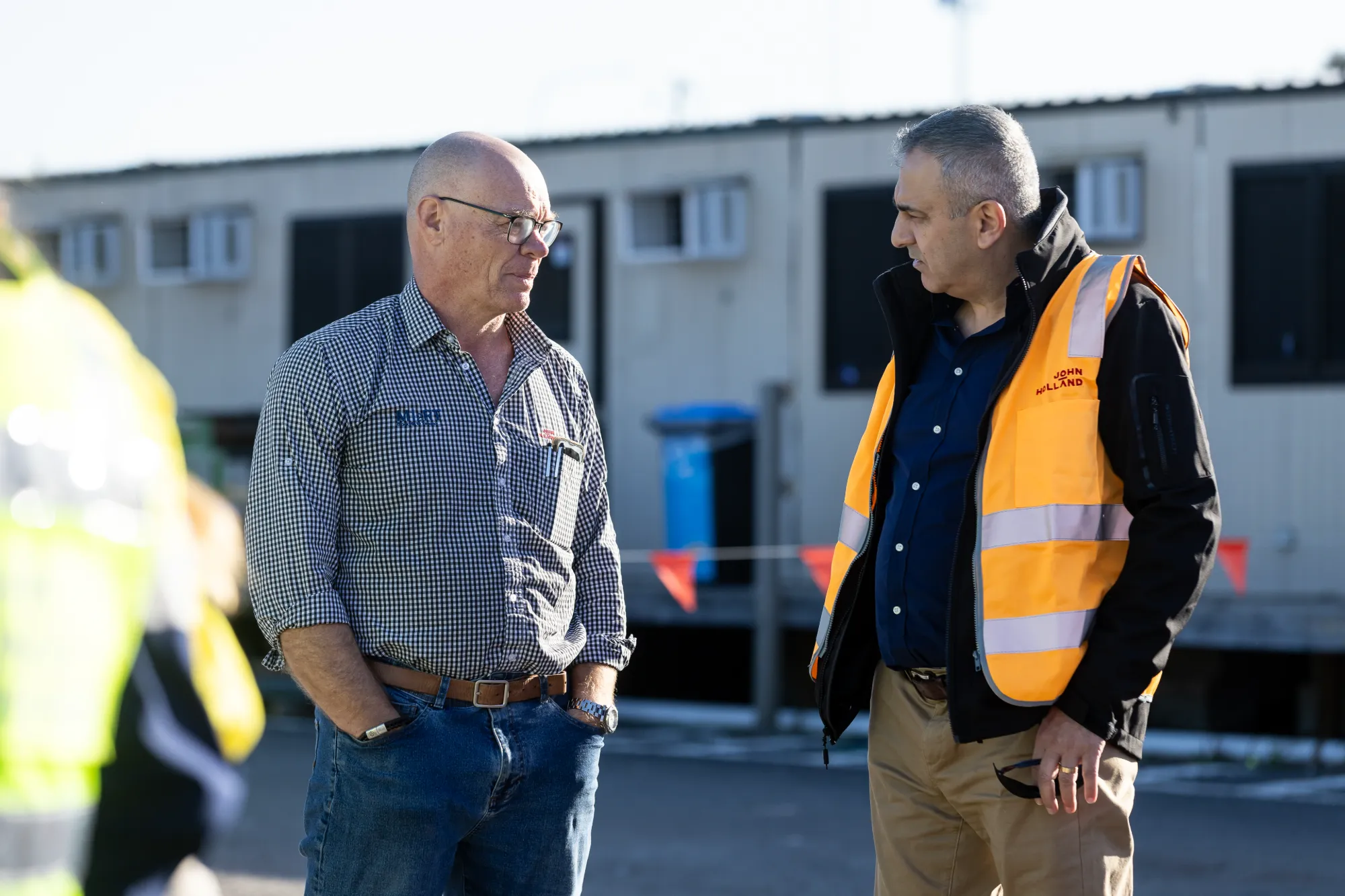
Brett O’Leary, Project Director (left) for the John Holland-Gamuda Joint Venture, discussing site operations with Joe Farah, John Holland Senior Pre-Contracts Manager for NSW/ACT - Infrastructure & Water.
“What made the difference was not having every answer from the start. It was having a team prepared to find the answers together. From the very beginning, Gamuda Engineering Australia and John Holland worked as one team, creating an environment where ideas could come from designers, engineers, construction crews, safety teams or those closest to the work. None of these solutions happened in isolation. They came from people asking a simple question: Is there a better way to do this?”
Rethinking the River Crossing
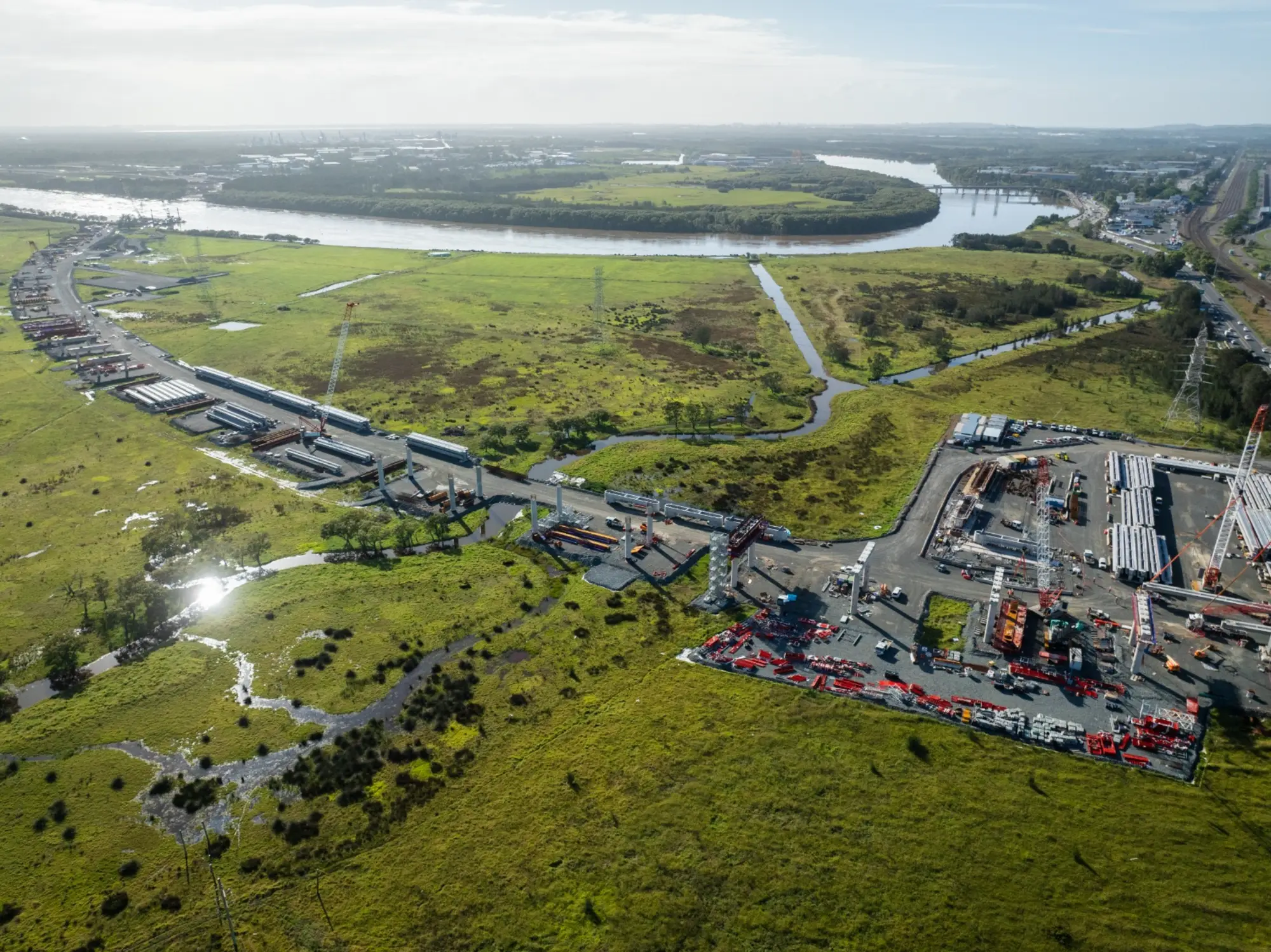
Early staging and construction work along the 2.6-kilometre Hunter River floodplain viaduct (January 2025).
The viaduct across the Hunter River floodplain runs for 2.6 kilometres, with 77 spans carrying hundreds of Super T girders of varying heights and geometries. Beneath the road, soft and compressible soils carried real risk of settlement, addressed through preloading and wick drains, while hydraulic modelling shaped where the road could sit without worsening flood flows. Sensitive habitats demanded careful handling too, from nest boxes ahead of clearing to seed collection from threatened species.
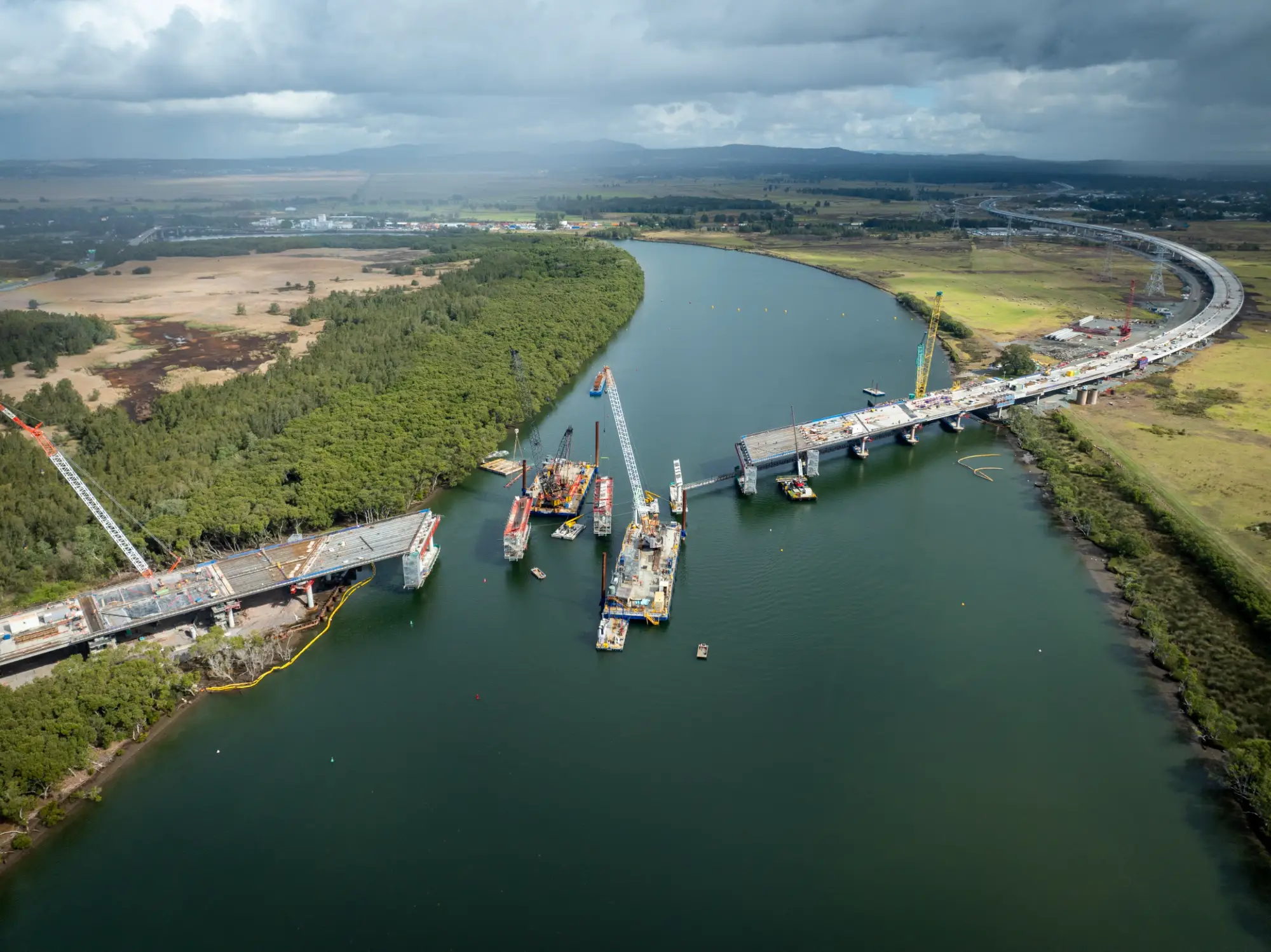
Marine and superstructure works over the Hunter River viaduct crossing (May 2026).
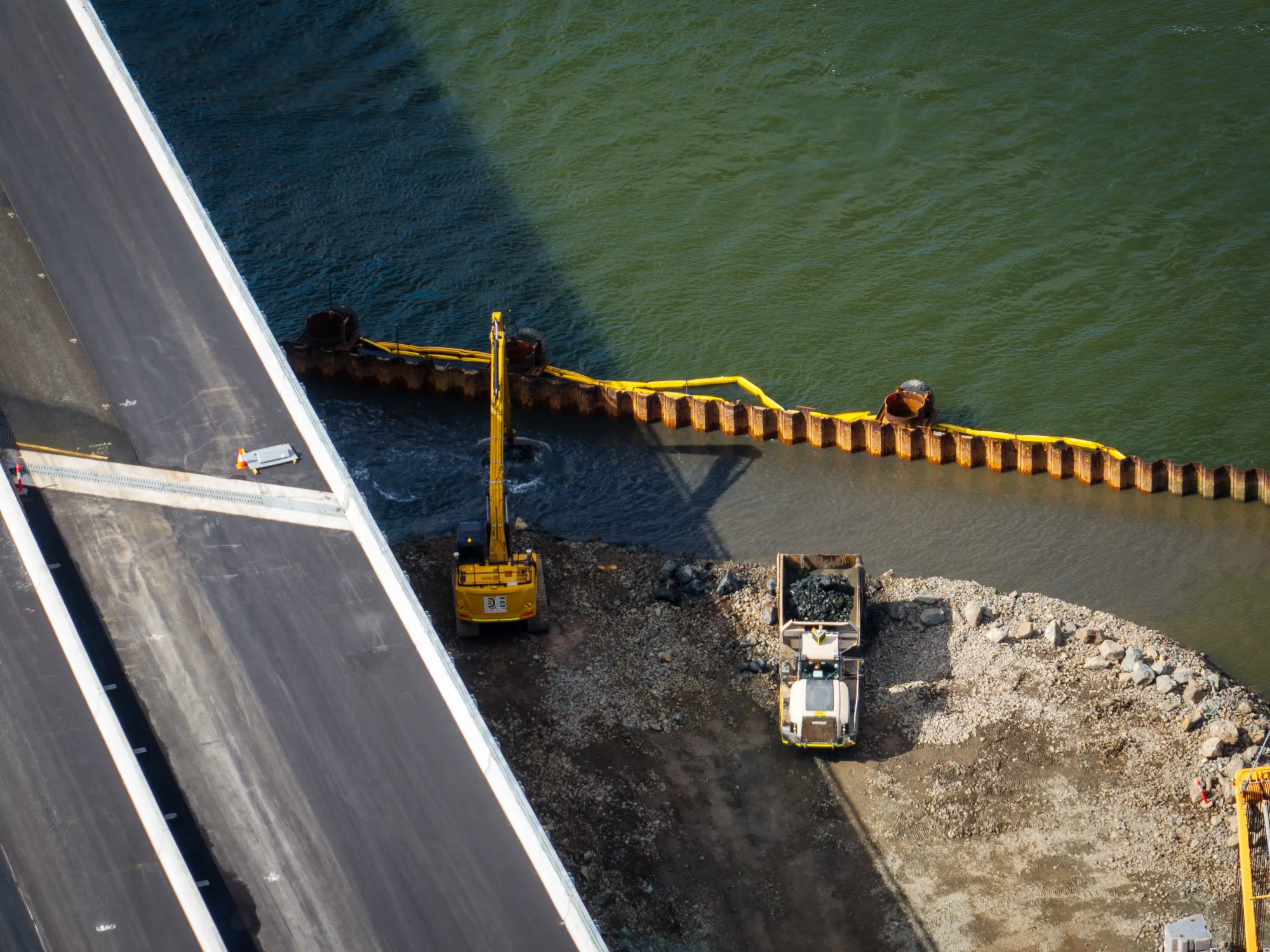
The most consequential decision, though, was how to build across the river itself. The original methodology involved barges and dredging. For Ian Moffat, Construction Director at GEA, the team instead developed a rock platform approach, removing the need for dredging and reducing the impact on flooding, while bringing councils and environmental authorities into the conversation early enough to avoid delays later.
The rock platform, designed to minimise environmental impact on the river ecosystem.
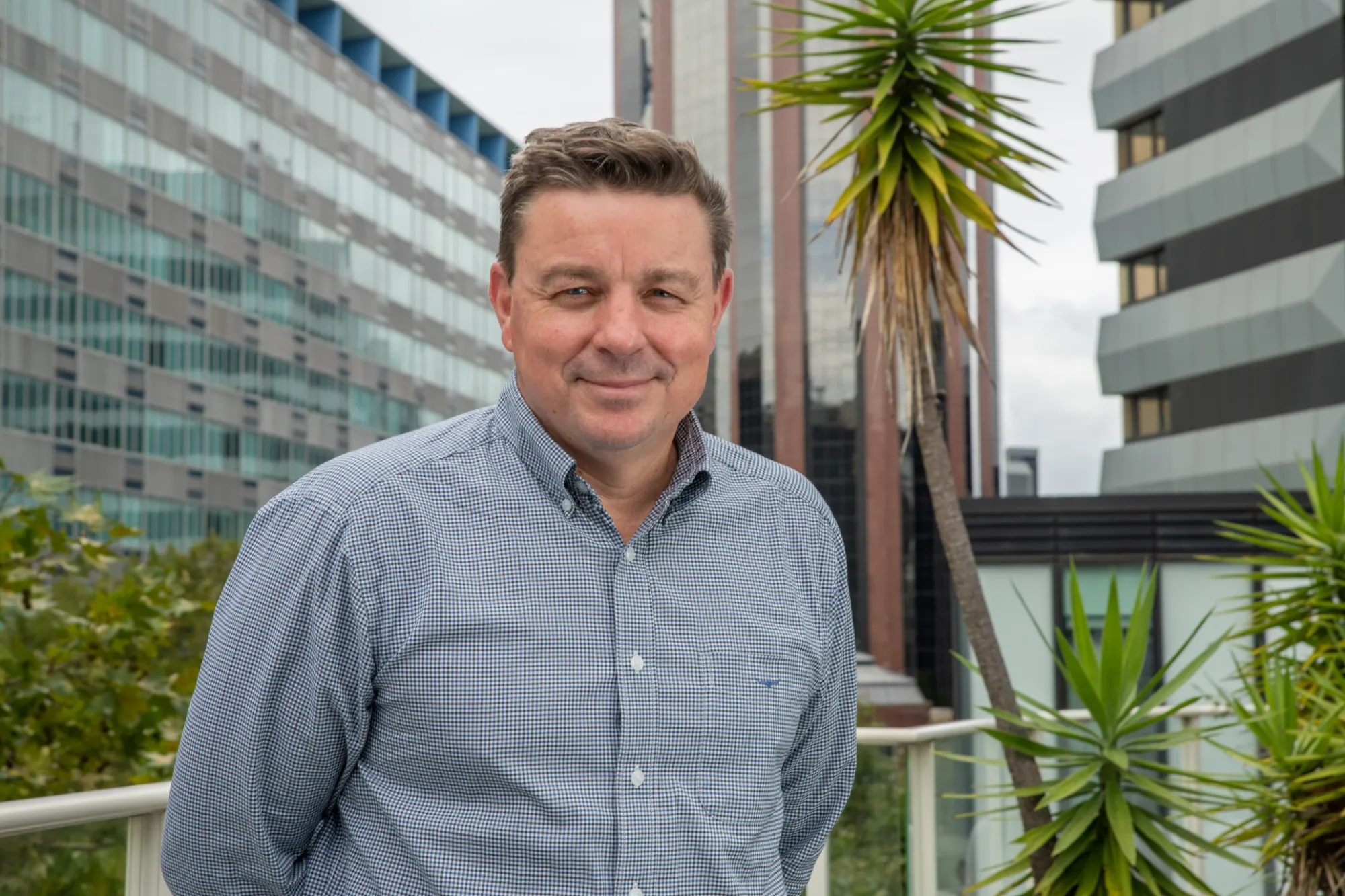
Ian Moffat, GEA Construction Director, who spearheaded early engagement for alternative engineering solutions.
It became a principle that held throughout the project: when a problem emerged, both teams looked for a better way to approach it in the first place.
One Team, Rather than Two
That mindset was underpinned by the relationship between GEA and John Holland, working under a single project identity built around three values: to have guts, to care, and to have fun.
Clear roles allowed issues to be raised early and resolved quickly, while regular forums and toolbox talks gave people avenues to contribute. The team consistently earned top marks for collaboration in quarterly contractor performance reports.
O’Leary captured what made the relationship distinctive: “Every project I have been on has involved dirt, concrete, stone, steel and bitumen. But the one thing that came down to was collaboration with both teams. It was about highlighting issues early, then having all parties work together to come up with the best project solution.” The revised approach to the Hunter River crossing was a case in point: a problem flagged early enough that the whole team could solve it together, rather than one partner working around the other’s decision downstream.”
When a Problem Becomes an Opportunity
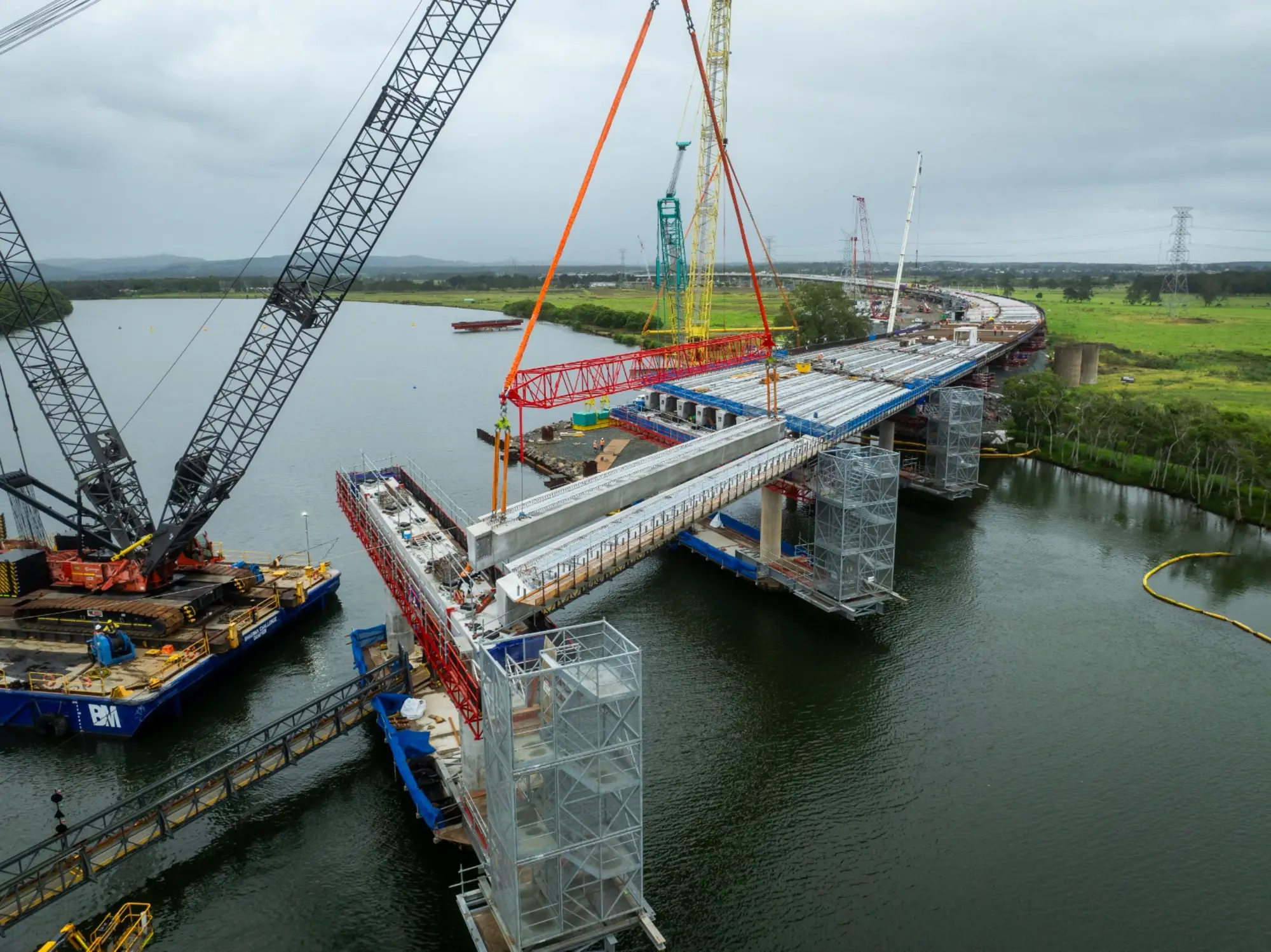
Installing the viaduct’s Super T girders was repetitive work, but that did not make it simple. Handling them safely during loading, storage, transport and installation was made harder by headstocks up to 15 metres high. The initial use of elevated work platforms introduced safety risks, so rather than accept those limitations, the site team designed a bespoke girder access platform, an idea that came from the people closest to the work, refined through engineering review, and built with John Holland’s heavy lift and temporary works teams.
Installation of Super T girders using the site-engineered custom access platform, February 2026.
The platform was driven first by a desire to make the work safer. The efficiency gains followed. The project saw a 75 per cent increase in girders installed per month, with rigging time significantly reduced. As O’Leary put it, the solution was “quicker, cheaper and safer than the previous method.” Proof that practical, safety-led thinking pays off in ways that go beyond the immediate problem.
Ideas Can Come from Anywhere
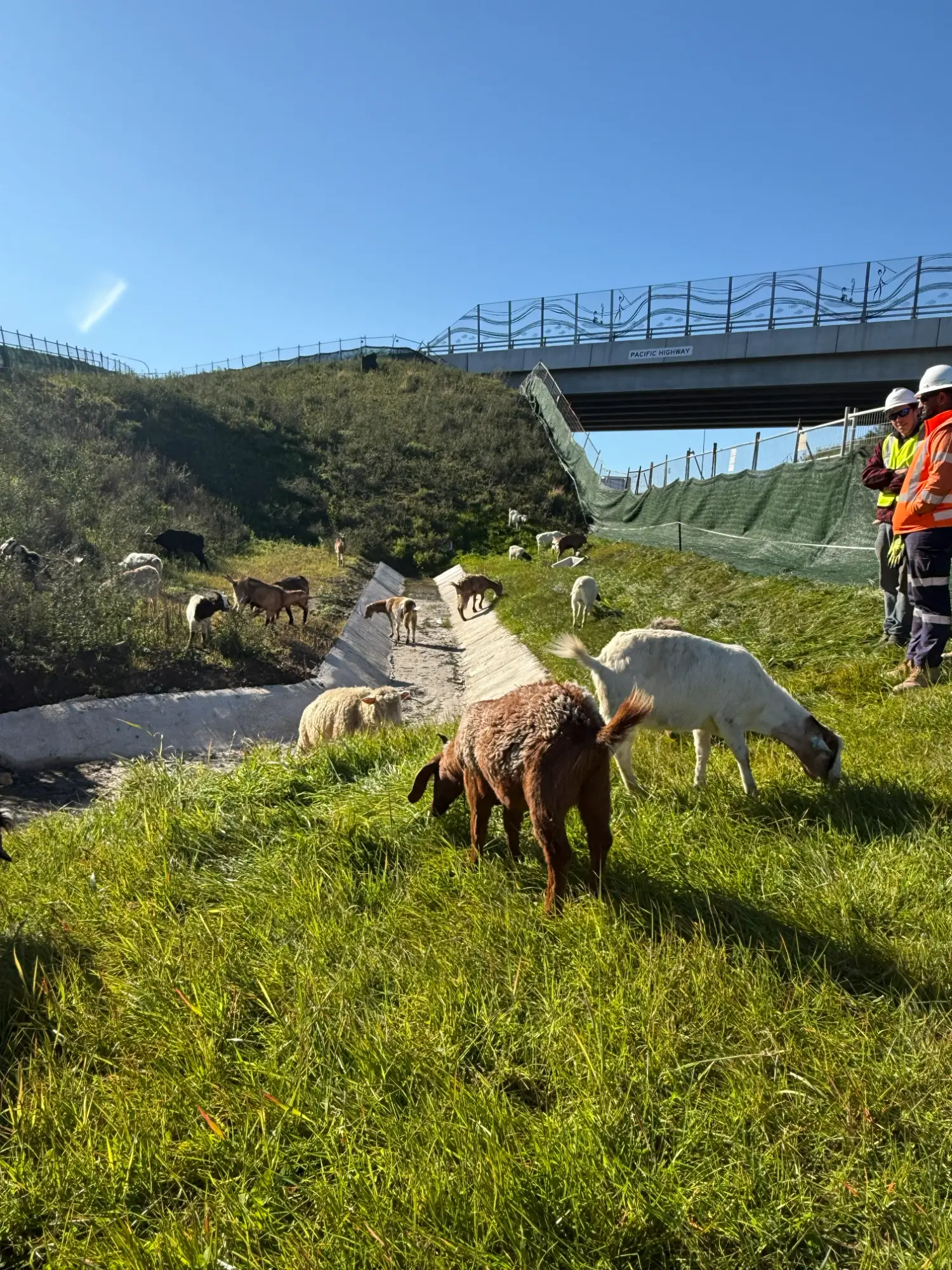
The girder platform was one of the clearest examples, but innovation on the M1 Pacific Motorway extension to Raymond Terrace was not confined to engineering design. Goats managed weeds on steep batters. Organic waste became biochar for landscaping. Remote speed cameras helped enforce roadwork speed zones, while Safety Shield, an Australian-first AI-powered system, was trialled to alert workers around the mobile plant.
Goats deployed along steep batter slopes for eco-friendly weed management (July 2026).
For Moffat, the common thread ran deeper than any single fix. “The success of these solutions is rooted in the team’s commitment to fostering a culture of innovation and collaboration,” he says. “The team cultivated an environment where people felt comfortable speaking up, challenging business-as-usual practices, and presenting new ideas without hesitation.”
“That openness was what turned individual problems into shared ones, whether the issue was a girder platform, a weed-choked batter, or a night shift running up against a noise curfew.”
O’Leary highlighted the contribution of GEA’s Brian Banks, whose work building the project’s safety culture and empowering people played an important role in its outcomes. Across the wider team, the focus remained on what was best for the project rather than which organisation a person belonged to.
What Remains After the Road is Built
The John Holland-Gamuda Joint Venture project has reshaped a critical 10-kilometre stretch between Black Hill and Tomago, between the M1 Pacific Motorway extension to Raymond Terrace, where it includes eight bridges and a 2.6-kilometre viaduct across the Hunter River floodplain.
But the most useful measure of the project may not be the road itself. It is what the team learned: that better solutions often begin with someone willing to question the established method, and that innovation does not always require a major technological breakthrough. Most importantly, the M1 showed what happens when collaboration moves beyond simply working alongside one another. It becomes a way of working, one that comes back, ultimately, to the people willing to keep asking whether there is a better way.
Yen So’s park and lakes blend urban regeneration with masterful township planning.
Today, if you visit it, you could never imagine what it looked like a decade ago.
We use tracking technologies to collect data relating to you to perform analytics, provide you with tailored content and ads based on your interactions on this and other sites or apps and allow you to share content on social media. By clicking on [Accept] you consent to this and to the sharing of this data with our partners. You can change your mind at anytime. Click here to find out more about our practices.
You can choose which analytical, functionality and targeting cookies we can set by clicking on the button(s):
However, if you use your browser settings to block all cookies (including strictly necessary cookies) you may not be able to access all or parts of our website.